Building Again: My Journey into Vibe Coding
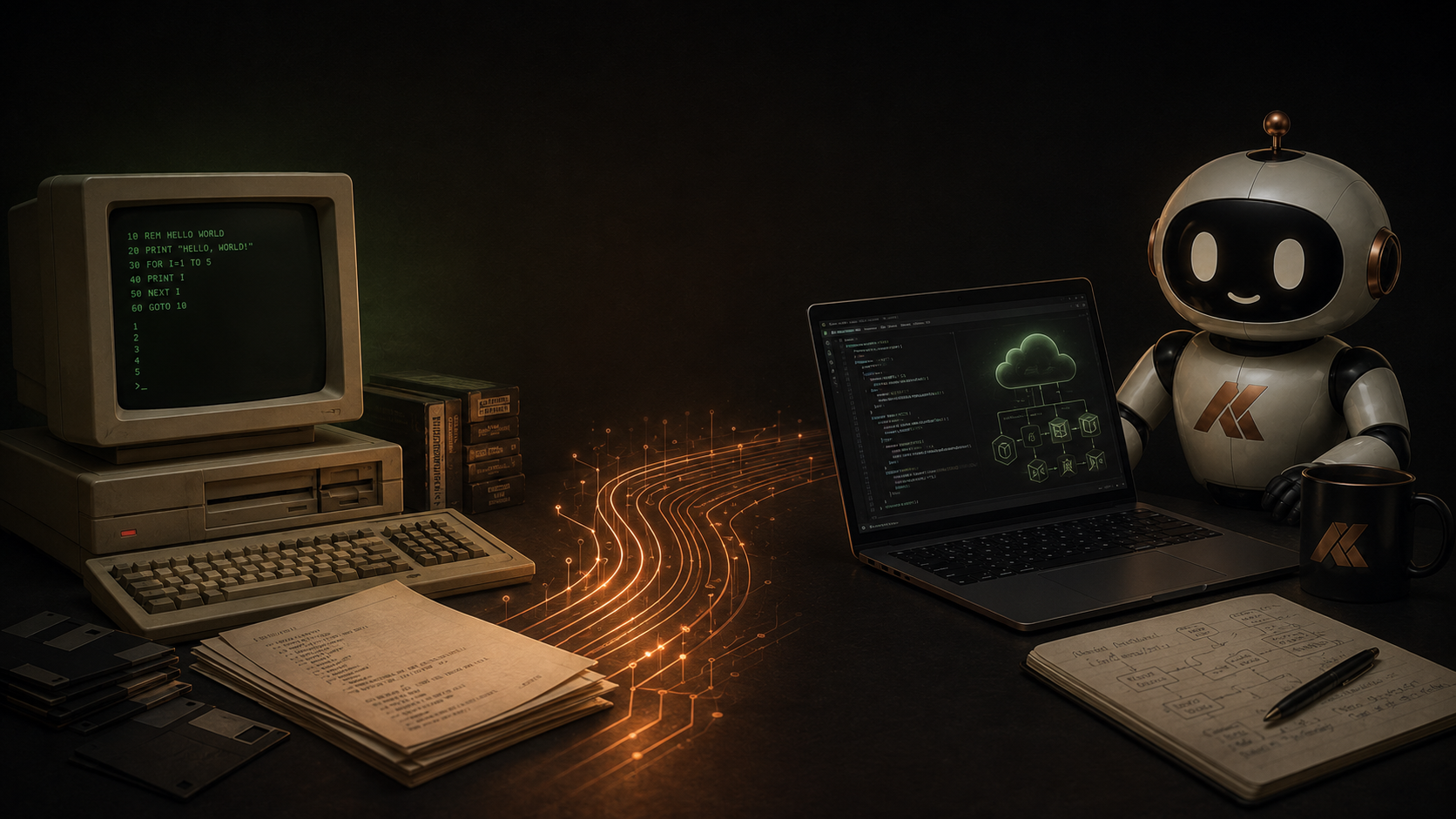
Nearly 30 years after I almost became a software engineer, AI has helped me start building again. This personal series follows my journey into vibe coding, and what I have learned about turning working prototypes into secure, supportable cloud applications.
AI can help me write the code. I still own what it becomes.
The software engineer I nearly became
Nearly 30 years ago, I planned to study Software Engineering, beginning with an HND before progressing to a degree.
Life took me in a different direction. I became a systems engineer, consultant and architect, but the part of me that enjoyed programming on a BBC Micro, learning Pascal, creating applications in Visual Basic and publishing software under the not-at-all-Microsoft-inspired name Kempsoft never completely disappeared.
Building again
Now, AI has helped me start building software again.
This series documents my personal journey into vibe coding: what AI enables me to create, what I have had to relearn and what happens when an interesting idea starts becoming a real application.
AI can help me explore an idea, understand an unfamiliar framework, create an initial implementation and diagnose problems. It can remove much of the friction between having an idea and seeing it work.
But a working prototype is only the beginning.
What happens after the first prompt?
First, the application needs to send an email. Then you begin to wonder whether other people could use it.
Suddenly, it needs:
- User accounts and authentication
- Authorisation and data separation
- Email delivery
- Database storage
- API integrations
- Deployment pipelines
- Monitoring and logging
- Somewhere secure and reliable to run
Each new capability introduces another dependency, credential and architectural decision.
SMTP credentials, authentication secrets, webhook signing keys, database connections, API keys and deployment tokens all need to be stored, scoped, monitored and rotated properly.
Then there are the bigger questions:
- Should the application live in Cloudflare or Azure?
- When should I use a platform secret store or Azure Key Vault?
- What belongs in GitHub Actions, and when should I use workload identity instead?
- How do I prevent an AI-generated shortcut from becoming a production vulnerability?
- At what point does a personal tool become a product?
Experience still matters
This is not a series about AI replacing nearly 30 years of experience.
It is about combining that experience with an AI companion to turn ideas into useful, secure and supportable cloud applications.
Vibe coding might help me create a working prototype.
Nearly 30 years of experience tells me whether it should ever become a product.
Articles in this series
- Part 1 From Kempsoft to Vibe Coding
- Part 2 I Just Need the App to Send an Email Coming soon
Get notified about new posts
Drop your email in and I'll let you know when there's something new — from the whole blog, or just Building Again: My Journey into Vibe Coding.